
Category: TRINITY 2024
UCU eLearning Platform
Search results: 329
This course examines the purpose and domain of the human resource management function in organizations. It stresses the skills and techniques used in the various activities within the human resources function, and relates them to the overall management of the organization. The primary objective of this course is to make the student knowlegeable in the central issues and tasks of human resource management. This knowledge includes understanding the relationship of the human resource function and the rest of the organization. It also involves acquisition of the concepts and terminology which provide the foundation for practice and for examining the behavioral implications of human resources decisions. In otherwards, the course is intended to address contemporary challenges faced by human resource professionals operating in a developing country context.
- Teacher: Kizito MARTIN
Category: Master of Business Administration
Computer systems in a network environment require significant expertise to administer, troubleshoot, and tune. This course presents the advanced tools and techniques needed to configure and to control (UNIX, Linux, Windows) machines and their peripherals. It then expands upon this information in a network environment. Finally, performance problems are discussed and a general methodology is defined for isolating/resolving performance problems.
Category: ADVENT 2022
This course describes the tissues and organs within the Abdomen, pelvis and perineum. These are parts of the body that deal mainly with nutrition, excretion and reproduction. The anatomical basis for radiological investigations and the safe surgical approaches will be explained.
Category: ADVENT 2024
This course unit aims at equipping students with in-depth regression analysis and related Techniques. The course will involve simple and multiple linear regressions (OLS); matrix representation of the regression model; statistical inferences (correlation analysis, T-test, F-test CHi2 test, ANOVA) for regression model; properties of OLS; diagnostics and remedies for multicollinearity and heteroskedasticity; diagnostics for model selection, variable selection, transformations (such as log, Box-Cox, etc.); appropriate Statistical packages (e.g. STATA) will be used in the course unit to demonstrate how to apply the Techniques on real data.
Model specification and data: developing a conceptual framework; types and sources of data, data mining, model specification and data generation; the mathematical Programming approach to policy analysis: the classical MP models, limitations of of MP models and extension to positive mathematical Programming, classification of mathematical Programming models commonly used in policy analysis, application in hypothesis testing, application in analyzing policy instruments and commodity policy, application in forecasting; econometric approach to policy analysis.
Classification of econometrics models, linear and none linear models, limited and censor-dependent variable approaches (logit, probit, tobit, and their extensions such as multinomial logit and probit etc.), system of equations or simultaneous equations, application in hypothesis testing, application in analyzing policy instruments and commodity policy, application in forecasting, the problem of causality in policy analysis, limitation of econometric models; impact assessment: propensity score matching, regression discontinuity designs, panel data to analyze with staggered entry.
Multivariate analysis· Introduction to Econometrics Preview
· Simple Linear Regression: Basic Concepts
· Simple Linear Regression: Estimation of Parameters
· Simple Linear Regression: Outliers
· Multiple Linear Regression: Basic Concepts
· Multiple Linear Regression: Estimation of Parameters
· Autocorrelation: Durbin-Watson Test Statistic
· Multivariate Regression
· Logistic Regression
· Polynomial Regression
· Autoregressive Model
· Vector Autoregressive Model
. Limited and censor-dependent variable approaches (logit, probit, tobit, and their extensions such as multinomial logit and probit etc.),
Detailed Course Content
|
Topic |
LH |
PH |
|
Simple and multiple linear regressions (OLS); matrix representation of the regression model; statistical inferences (correlation analysis, T-test, F-test CHi2 test, ANOVA) for regression model; |
4 |
|
|
Properties of OLS; diagnostics and remedies for multicollinearity and heteroskedasticity; diagnostics for model selection, variable selection, transformations (such as log, Box-Cox, etc.); |
4 |
18 |
|
Appropriate Statistical packages (e.g. STATA) will be used in the course unit to demonstrate how to apply the Techniques on real data. |
6 |
|
|
Model specification and data: developing a conceptual framework; types and sources of data, data mining, model specification and data generation; the mathematical Programming approach to policy analysis: |
4 |
|
|
Application in hypothesis testing, application in analyzing policy instruments and commodity policy, application in forecasting; econometric approach to policy analysis. |
4 |
|
|
Classification of econometrics models, linear and none linear models, limited and censor-dependent variable approaches (logit, probit, tobit, and their extensions such as multinomial logit and probit etc.), |
4 |
2 |
|
System of equations or simultaneous equations, application in hypothesis testing, application in analyzing policy instruments and commodity policy, |
8 |
|
|
Application in forecasting, the problem of causality in policy analysis, limitation of econometric models; |
4 |
|
|
Application in forecasting, the problem of causality in policy analysis, limitation of econometric models impact assessment |
4 |
|
|
propensity score matching, regression discontinuity designs, panel data to analyze with staggered entry |
4 |
|
|
Multivariate analysis and experimental economics (factor analysis, principal component analysis, cluster analysis, discriminant analysis), auctions theory. |
4 |
|
Referencences:
Econometrics (2022) by Bruce Hansen, recommended but not required.
https://www.ssc.wisc.edu/~bhansen/econometrics/
Other complementary Texts include:
Angrist, J.D. and J. Pischke (2009): Mostly Harmless Econometrics - An Empiricists Companion, Princeton University Press
Amemyia, T. (1985): Advanced Econometrics, Blackwell
Berndt, E.R., The Practice of Econometrics: Classic and Contemporary. Addison-Wesley, 1991.
Chow, G. C. Econometrics. McGraw Hill, 1983.
Cameron, A. C. and Travedi, P.K. (2005): Microeconometrics – Methods and Applications, Cambridge University Press
Davidson, R. and McKinnon, J.G. (1993): Estimation and Inference in Econometrics, Oxford University Press
Drhymes, P. (1994) Topics in Advanced Econometrics, Vol 2: Linear and Nonlinear Simultaneous Equations, Springer Verlag
Green, W.A., Econometric Analysis, 8th edition, Prentice Hall.
Goldberger, A. S., A Course in Econometrics. Harvard University Press, 1991.
Hayashi, F. (2000). Econometrics. Princeton: Princeton University Press
Malinvaud, E. Statistical Methods of Econometrics, 3rd Edition. North-Holland, 1980.
Ramanathan, R. Statistical Methods in Econometrics, Academic Press, 1993.
Ruud, P.A. (2002): An Introduction to Classical Econometric Theory, Oxford University Press.
Sargan, J. D. Lectures on Advanced Econometric Theory. Basil Blackwell, 1988
Wooldridge, J.M . (2002): Econometric Analysis of Cross-Section and Panel Data, MIT Press.
Schervish, M.J. (1995): Theory of Statistics, Springer Verlag
Spanos, A. Statistical Foundation of Econometric Modeling. Cambridge University Press, 1986.
Theil, H. (1971): Principles of Econometrics, Wiley
White, H. (2000): Asymptotic Theory for Econometricians (Revised Edition), Academic Press
Zellner, A. An Introduction to Bayesian Inference in Econometrics. Wiley-Interscience, 1996.
Gurmu, Shiferaw, and Pravin K. Trivedi,
(1996)"Excess Zeroes in Count Models for Recreational Trips." Journal
of Business and Economics Statistics 14: 469-477.
Blundell, Richard, Rachel Griffith, and Frank Windmeijer, (1984)"Individual Effects and Dynamics in Count Data Models," London: Institute for Fiscal Studies Working Paper No. W99/3 (1999).
Hausman, Jerry A., Zvi GriliLHes, and Bronwyn H. Hall, "Econometric Models for Count Data with an Application to the Patents-R&D Relationship," Econometrica 52: 909-938.
Hall, Bronwyn H., Zvi GriliLHes, and Jerry A. Hausman, (1986)"Patents and R&D: Is There a Lag?" International Economic Review 27: 265-283.
Montalvo, Jose Garcia, (1993) "GMM Estimation of Count Panel Data Models with Fixed Effects and Predetermined Instruments," Journal of Business and Economic Statistics 15: 82-89.
LHamberlain, Gary, "Multivariate Regression Models for Panel Data, (1982)" Journal of Econometrics 18:5-46.
Exercise Collections:
P. C. B. Phillips and M. R. Wickens, Exercises in Econometrics, Vol. I & II. Allen/Ballinger, 1978.
K. Abadir and J. Magnus, Econometric Exercises Vol 1: Matrix Algebra. Cambridge University Press, 2005.
Category: ADVENT 2022
Section 1: Assessment Details
-
Grading Format and Weighting:
This assignment will be graded out of 10 and contributes to your continuous assessment mark. -
Due Date:
15th November 2025 by 23:59 -
Late Submission Policy:
No late submissions will be accepted unless accompanied by valid documentation. -
Course Learning Outcomes:
Upon completion of this assignment, students will be able to:-
Apply non-parametric statistical methods using STATA.
-
Conduct and interpret Chi-square tests for independence.
-
Prepare and present results in the format of a scientific journal article.
-
Translate continuous variables into categorical variables for non-parametric analysis.
-
Integrate and update prior analytical work coherently.
-
-
Type of Submission:
Individual assignment submitted as part of a cumulative journal article. -
Format:
-
PDF
-
Journal article style (continuous from previous assignments)
-
-
Length:
Approx. 2,000–2,500 words (excluding tables, figures, and references). -
Reference Style:
Use APA (7th Edition) for all citations and references. -
Naming Conventions:
Save the file as:StudentID_Assignment5_ChiSquare.docx
(e.g., 20250065_Assignment5_ChiSquare.docx) -
How to Submit:
Upload the completed document to the class Moodle portal as directed. Notify your lecturer or class representative if you have any problems.
Section 2: Purpose
-
Context:
This assignment extends your learning from Assignments 2–4, moving from parametric tests to non-parametric statistics. It introduces the Chi-square test for independence, which is vital for analyzing relationships between categorical variables. This analysis is particularly useful when working with survey data, health outcomes, and other categorical measures.By the end of the assignment, you will gain hands-on experience in preparing categorical datasets, performing chi-square analysis in STATA, and interpreting relationships between variables relevant to your field of study.
-
Description:
Students will use STATA to test the association between two categorical variables using the Chi-square test for independence. They will build on their existing dataset and journal article, converting their chosen dependent variable into a categorical form. Results must be integrated into the ongoing journal article, addressing all previous feedback. -
Task:
-
Review your previous journal article (Assignments 2–4) and correct any issues noted in feedback.
-
Using your chosen dependent variable from the Google Sheet (link here):
-
Convert your dependent variable from a continuous/numerical measure into a categorical variable (e.g., BMI → “Underweight,” “Normal,” “Overweight”).
-
Select one categorical independent variable (e.g., Gender, Year of Study, Living Arrangement).
-
Using STATA, perform a Chi-square test for independence between the two categorical variables.
-
-
Clearly report your:
-
Hypothesis (Null and Alternative)
-
STATA output (including observed and expected frequencies)
-
Chi-square statistic, degrees of freedom, and p-value
-
Interpretation of results (indicating whether a significant relationship exists)
-
-
Add this analysis to your journal article, under the Results and Discussion sections.
-
Include relevant tables, graphs, and references.
-
Ensure that your final document integrates results from Assignments 2, 3, 4, and 5 coherently.
-
Section 3: Learning Technology Tool Requirements
-
Required Tools:
-
STATA (Version 16 or higher) – for statistical analysis
-
Microsoft Word – for article preparation
-
Google Sheets – to confirm your dependent variable
-
Moodle – for file submission
-
Section 4: Supplementary Documentation
-
Associated Course Materials:
-
Lecture slides on Non-parametric tests and Chi-square analysis
-
Practical STATA guide for Chi-square tests
-
Dataset and coding instructions from previous assignments
-
Example journal articles applying Chi-square tests in your area of study.
-
-
Rubric:
| Assessment Criteria | Description | Weight (%) |
|---|---|---|
| Data preparation and correct variable conversion | Appropriate recoding of numerical data into categories | 15% |
| Execution of Chi-square analysis in STATA | Correct application of the Chi-square test and output interpretation | 25% |
| Interpretation of results | Clear explanation of findings and implications for nutrition/health | 25% |
| Integration with prior assignments | Smooth continuation from earlier journal submissions and incorporation of feedback | 15% |
| Journal article presentation | Logical structure, clarity, and adherence to academic conventions | 10% |
| Proper referencing and formatting | Accurate use of APA referencing and presentation | 10% |
-
Examples:
A sample Chi-square analysis output and interpretation will be demonstrated during practical sessions. -
Academic Integrity:
Each student must perform and submit their own work. Sharing results, copying code, or using others’ interpretations will be treated as academic misconduct. -
Avoiding Plagiarism:
For best practices in citation and originality, consult:
👉 Preventing Plagiarism – Plagiarism.org
- Teacher: Martin MUTAMBUKA
Category: ADVENT 2025
Hello and welcome to the Audio production class. We look forward to getting to know each of you and learning together. During the course of the study semester we will together cover these key broad areas:
● Nature of sound and how it is transmitted.
● Audio facilities/equipment-both analog and digital
● Radio production tools.
● The process of producing good quality audios
In order to ensure we progress in an orderly way, everyone will be expected to read, listen to assigned audio materials and write about them, and present audio projects. I encourage you to go beyond assigned materials as the more broadly you read, the more sense this course will make. The end will be a submission of an audio project.
Teaching and learning methods will be varied and will include face to face and online lectures, small group discussion, independent study and presentation.
Category: ADVENT 2024
This course is designed by the Faculty of Science and Technology to equip all university students with the basic knowledge and skills in computing. It seeks to demystify computers and their use through lectures and practical lab sessions.
It introduces students to the basic concepts of Information Technology, the use of the Internet and office applications like a word processor and spreadsheets.
The course is spread over a period of 14 weeks which is the order this Student Workbook follows. You are required to follow through each week and attempt exercises at the end of each week.
- Lecturer: Emmanuel ISABIRYE
- Lecturer: Samson Kaggwa S
- Lecturer: Paul Kisambira
- Lecturer: Samuel Lubowa
- Lecturer: Henry SSEGUYA
- Lecturer: Dinah Wobuyaga
Category: Foundation Studies
This course is designed by the Faculty of Engineering, Design and Technology to equip all university students with the computing knowledge and skills for personal use, the workplace, and society at large. It teaches concepts that are relevant in this digital age.
It uses blended learning, face-to-face, and practical sessions to pass across the knowledge. It demystifies computers and provides students with an added advantage for this digital world we live in.
The students will be introduced to the basic concepts of Information Technology, the use of the Internet and office applications like a word processor, presentation and spreadsheets, and the amazing things computers are doing in their field of study. Each week has exercises that help students to appreciate the theoretical concepts better. Other non-technical skills you will learn in this course include; thinking skills, communication skills, research skills, collaboration skills, and self-management skills.
Category: ADVENT 2023

This course is designed by the Faculty of Science and Technology to equip all university students with the basic knowledge and skills in computing. It seeks to demystify computers and their use through lectures and practical lab sessions.
It introduces students to the basic concepts of Information Technology, the use of the Internet and office applications like a word processor and spreadsheets.
The course is spread over a period of 14 weeks which is the order this Student Workbook follows. You are required to follow through each week and attempt exercises at the end of each week.
- Lecturer: Sabitti Gonza
Category: Foundation Studies
- Teacher: WILFRED WABINENO
Category: EASTER 2025
Question one:
a. Select a real-world business or industry (e.g., agriculture, manufacturing, or technology). Describe a scenario where the business has to make a decision between two types of products or services. Draw a PPF for this scenario and discuss the potential opportunity costs and trade-offs involved.
b. Discuss how factors such as technological advancement or an increase in resources can shift the PPF. Use a graph to show the effect of such changes on the PPF for the chosen industry. How do these shift’s impact business decisions and economic growth?
Category: ADVENT 2024
At the heart of this course is the question of how to conduct a robust scientific inquiry. You will learn the theoretical, conceptual and methodological issues underlying a good academic research conducted to guide business practice as well as extend existing body of knowledge.
- Teacher: Stephen Kyakulumbye
This course unit is designed to help students to offer pastoral leadership and how to manage churches.
The participants of the course are;
- Preparing for ministry
- Leaders holding pastoral positions.
- Serving in Para-church and other organizations
- Preparing for further theological studies.
- Teacher: Denis RUHAMA
Category: EASTER 2026

Commercial graphic design is about and takes part in packaging and marketing by providing designs for labels, trademarks, colophons, and advertising materials (such as posters, catalogs, booklets, banners, prospectuses etc). Commercial graphic designers also provide such materials vital to industry as business forms and envelopes.
Category: TRINITY 2022
Community Psychology is about understanding people within their social worlds and using this understanding to improve their welbeing. It stands to bridge the gap between the psyche and the social, the private, and the public.
- Teacher: Rosemary BWIRE
Category: Module 6
This is a research methodology course that focuses on developing researching and writing skills in Computer Science & Engineering Domain. As the Computer Scientist, software developer, software engineer, research requires multidisciplinary approach. Many of the concepts are borrowed from social science, Psychology, Statistics, and other domains. Here we investigate the empirical research methods for their applicability and suitability to a research problem. As each of them comes with their strengths and weakness, perhaps a feasible, mix of such methods should provide greater insight and understanding in order to derive useful contributions.
Category: EASTER 2023

In this course, you will be exposed to a multidisciplinary domain that uses scientific methods, processes, algorithms, and systems to draw knowledge and insights from unstructured data. Students will explore the theoretical issues, methods, tools and problems that relate to data-rich issues in the humanities, social sciences, and sciences. Students will learn the core concepts of inference and computing, while working hands-on with real data including humanities data, social science data (ex. spatial data and social networks), and scientific data. We will examine how data analysis technologies can be used to improve decision-making within the liberal arts disciplines, as well as ethical implications.
Category: ADVENT 2022
This course will provide students with the knowledge required to understand and
troubleshoot digital electronic circuits.
At the end of this course, a student will be able to;
• understand the basics of digital circuits.
• design different types of digital logic circuit.
• distinguish between analog and digital systems.
• identify the various digital ICs and understand their operation.
• apply Boolean laws and K-map to simplify the digital circuits.
• understand the function of elementary digital circuits under real and simulated
environment.
Category: EASTER 2023
The course is compulsory to all postgraduate
students of the Department. It is
designed to provide students with an understanding of the theoretical and
practical principles of digital
information systems and services. The course will focus on critical issues surrounding the development of digital information systems and services, and their contents
in digital environments.
Topics that will be covered in the course include digital information resources and services, digitization of
non-digital materials, library automation, open source software, electronic resource
management, management of information overload,
search strategies, digital
preservation, technological skills and training requirement for the digital work environment
among others
- Teacher: A kukundakwe
- Teacher: Faith MBABAZI
Category: EASTER 2023
Disaster management as a course of study introduces participants to the complex interaction between disaster and development, and relief development assistance programs of humanitarian organizations. It intends to lead students from disaster response strategies and programs to alternative strategies and directions in disaster mitigation and preparedness. It is thus expected to provide participants with relevant knowledge on disaster management to enable and facilitate communities appreciate sustainable management practices which enable them to contribute to sustainable development. The content of the course includes: definition, types and disaster management cycle, (mitigation, preparedness, response and recovery), education and public awareness. This course will enable students to develop an awareness of the chronological phases of natural disaster response and refugee relief operations; and understand how the phases of each are parallel and how they differ.
Disaster management as a course of study introduces participants to the complex interaction between disaster and development, and relief development assistance programs of humanitarian organizations. It intends to lead students from disaster response strategies and programs to alternative strategies and directions in disaster mitigation and preparedness. It is thus expected to provide participants with relevant knowledge on disaster management to enable and facilitate communities appreciate sustainable management practices which enable them to contribute to sustainable development. The content of the course includes: definition, types and disaster management cycle, (mitigation, preparedness, response and recovery), education and public awareness. This course will enable students to develop an awareness of the chronological phases of natural disaster response and refugee relief operations; and understand how the phases of each are parallel and how they differ.
Knowledge and understanding
The course provides a unified treatment of economic policy, introducing the students to a rigorous analysis of its
main topics in order to help the students to build a solid background in economic policy and to become familiar
with new methodologies.
Knowledge and applied understanding
The course provides students with the economic knowledge to enable them to understand major policy issues
in the twenty-first century. By the end of course the student should have an understanding of theoretical
economic models and their implications for economic policy and planning, mainly macroeconomic and labour market policies;
to be able to apply an analytical framework to explain the effects of monetary and fiscal policy on
macroeconomic performance, economic crises, financial and fiscal stability, and income and wage distribution.
CONTENTS
Modern Macroeconomics: A review of methods and tools: IS-LM-MP framework, time series econometrics, and Dynamic General
Equilibrium models. Great Moderation and macro policy. The Great Recession. Budget Deficits and Fiscal Consolidations. Labor
Market Policy: Wage distribution, minimum wage; Unemployment Insurance in OECD countries and the impact on wages,
unemployment, and productivity. International Macroeconomic Policy.
Lecture notes, as the main reference for this course, will be provided prior to the lecture. There are other supplementary readings
from academic journal articles, books, and policy analysis and reports which will be accessible in the course website.
TEXTBOOKS
• David Romer. 2000. "Keynesian Macroeconomics without the LM Curve". Journal of Economic Perspectives, 14(2): 149-169.
• Ben Bernanke. 2004. "The Great Moderation". Remarks at the meetings of Eastern Economic Association, Washington DC.
• Reinhart, Carmen, and Kenneth Rogoff. 2009. "The Aftermath of Financial Crises" in "This Time is Different: Eight Centuries
of Financial Folly"
• Diamond, D. and Philip Dybvig. 1983. "Bank Runs, Deposit Insurance, and Liquidity" Journal of Political Economy. 91(3): 401-
419.
• Tressel, Hierry; Wang, Shengzu; Kang, Joong Shik, and Jay Shambaugh. 2014. “Adjustment in Euro Area Deficit Countries:
Progress, Challenges, and Policies". IMF working paper.
• Jay C. Shambaugh. 2012."The Euro's Three Crises". Brokkings papers on economic activity. 157-187.
• Gauti B. Eggertsson. 2010. "What Fiscal Policy is Effective at Zero Interest Rates?" NBER Macroeconomics Annual.
Category: ADVENT 2021
The field of environmental chemistry is rapidly expanding, and excellent
employment opportunities exist in the academic, government, industrial and
public policy sectors. Environmental chemistry is the study of chemical
processes occurring in the environment which are impacted by humankind's
activities. These impacts may be felt on a local scale, through the
presence of urban air pollutants or toxic substances arising from a chemical
waste site, or on a global scale, through depletion of stratospheric ozone or
global warming
Course Objectives
The focus of this course unit is on developing a fundamental understanding of the nature of chemical processes in different environmental media (air, soil & water) so that humankind's activities and technology can be accurately evaluated. The course objectives are:
a. To provide an introduction to, and application of Environmental Chemistry and other related issues/matters.
b. To describe and explain the strategies and tools used to control and manage environmental pollution by considering selected Environmental chemicals.
c. To place contemporary problems of environmental pollution in a global perspective.
Learning Outcomes
Upon successful completion of this course, students will be able to:
a. understand the linkage between Chemistry and the Environment; causes and effects of Environmental problems/pollution arising from the chemical processes,
b. develop cognitive and analytical skills for Environmental Chemistry issues.
Category: ADVENT 2023
Going “global” through global supply chains helps facilitate entry into new markets, enables business growth, and provides firms with access to new technologies through partnerships with foreign firms. Global supply chain management involves planning how the entire supply chain will function as an integrated whole, with the aim of generating an optimum level of customer service while being as cost-efficient as possible.
- Teacher: Pascal MULOOSI
Category: Bachelor of International Business
- Teacher: Christopher BYARUHANGA
Category: TRINITY 2025
- Lecturer: Moses AGABA
Category: Department of Theology
This class will introduce you to Insurance law and an appreciation of the industry in general. Students will examine the development of insurance over the years in other jurisdictions as well as in Uganda. This will enable them appreciate the important terminology used in insurance law for example the insurer, insured insurance policy, moral hazard, premium, claims procedure as well as other terminology as will be discussed in this class.
For purposes of ensuring that students obtain maximum benefit from the course, students have the obligation to read the material issued before the classes. This will enable students to critically analyze issues at hand as well as a more interactive learning environment. A discussion forum has been set up to enable students to ask questions related to the subject and matters that need clarification after the classes. This will be available online together with all the necessary reading materials for the class.
See: E learning Platform (https://moodle.ucu.ac.ug/
- Lecturer: Dinah Mukasa
Category: Bachelor of Laws - Year 4
This course unit focuses on how to reap the benefits of interventions using psychology and theology rather than the usual practice of separation of interventions. Welcome to walk this journey together.
- Lecturer: Otwine Anne
Category: Module 4
The course of Intellectual Property I constitutes Introduction to Intellectual Property law (in general). It then delves into Copyright & Neighbouring Rights law; Trademarks, passing off and emerging related issues such as Image rights and confidential information. The course also examines how intellectual property law balances interests (e.g. creativity, innovation, technological development, access, use), and current issues and emerging debates in intellectual property such as ISP liability, online defamation, Cybersquatting, Shape & Olfactory marks.
a) Introduction to aspects of Intellectual Property Law: This part of the course offers an introduction into domestic aspects of the law and policy relating to Intellectual Property.
b) Copyright & Neighbouring rights law: This part of the course examines the fundamental characteristics of the law of Copyright and related rights in Uganda together with the development of international copyright agreements, particularly the Agreement on Trade Related Aspects of Intellectual Property Rights (TRIPS). The focus on the law is through case studies with specific references to International developments in Copyright law vis-à-vis an exposure into the intersection with image rights, Traditional Cultural Expressions (TCEs) or Folklore as well as the relationship between copyright and Cyber law.
c) Trademark law: The third part of the course examines the objectives of the national trademark system alongside international developments in trademark law through case studies. It also examines the practical problems associated with trademark registration, product counterfeiting and considers the controversial issues raised in similarity of goods and passing off. The course navigates through the critical jurisprudence developing in trademark law in Uganda and the latest trends on enforcement, including global discussions on trademark law in the Cyber world.
- Lecturer: Anthony kakooza
Category: Faculty of Law
- Teacher: Moses AGABA
Category: Department of Theology
- Lecturer: Alex ARINAITWE
Category: Department of Theology
- Teacher: PAUL WATSUSI
Category: TRINITY 2025
The course introduces students to concepts of epidemiology and disease surveillance.
Epidemiology of common communicable diseases will be discussed to equip students with knowledge of disease patterns. Disease surveillance and health education are discussed with a view to control outbreaks and epidemics of common communicable diseases in society.
Category: ADVENT 2024
- Teacher: Elizabeth NAGUDI
Category: ADVENT 2025
Warm Christian greeting to you our beloved student.
Welcome to the Online UCU student experience, where one will access all student-centered content.
On login you will have access to the to all your course units on the dashboard. A student must have registered for either Easter (January), Trinity (May) or Advent (September) semesters. A link has been provided to provide a step to step guide on the registration process. (See the video above)
Note: Registration for a semester is on ALPHA (alpha.ucu.ac.ug) while all online learning is on moodle(moodle.ucu.ac.ug)
To log in to the system:
To log in, please follow this link https://moodle.ucu.ac.ug/login/index.php or click the 'Login' link on the top right corner of this page.
Staff: Use your UCU email address and password.
Students: Use your UCU email address in the format AXXXXX@students.ucu.ac.ug and the password. AXXXXX is your student Access Number.
If you experience any challenges, please send an email to elearning@ucu.ac.ug
NB: Turn off your VPN when accessing the UCU elearning platform for a fast and seamless user experience.
- Teacher: Nelson ORODRIO
Category: Department of Information Technology
- Teacher: David SUNDAY
Category: Department of IT
- Teacher: Arthur Owiny
Category: BSCPM_1
- Lecturer: Benjamin TAREMWA
Category: Department of IT
- Lecturer: Richard Tumwizere
Category: Department of IT
This course enlightens bachelors’ students on the nature and uses of computers, providing them with the necessary Knowledge & Skills set to work effectively in an Information Technology environment.
Students will be introduced to the basic concepts of information technology and growing trends in the world today. The student will get basic knowledge about the computer and its applicability. Widely used applications including Word processing, Spreadsheets, Databases, and Presentation software will be taught
Category: ADVENT 2023
- Teacher: Dorcas KAGOYA
Category: ADVENT 2025
A. Course Description:
Humanity shares a vast diversity of culture. These cultures add some value to their particular philosophies, thinking and approach to particular concerns of well-being. In using African Traditions to engage peace building, the course explores African structures and their peculiarities in peace building using anthropological approaches. It looks at Mato Oput among the Acholi of Uganda, Gacaca in Rwanda, Bashingantahe in Burundi and the different forms of peace building used by traditional kingdoms and systems in Africa. While exploring blood pacts that solve conflicts and rituals of peace that help peace building, learners will be enabled to re-think and visualize a non-violent community. It also underscores God as the source of peace.
B. Course Objectives:
To demonstrate how African Traditions and structures continue to provide mechanisms for peace building. To examine acclaimed importance’s, and effectiveness of using endogenous methods in solving conflicts. To help students apply some of the elements learnt in peace building and solving conflicts.
C. Learning outcomes:
At the end of this course, students will:
1. Be able to discuss and appreciate African Traditions and Structures in peace
building
2. Be able to apply the learnt principles of peace building in simple and complex
realities of personal and communal life.
3. Be able to compare and contrast different peace building mechanisms across
the African Continent.
- Lecturer: Feta SIMON
Category: BSWSA 1 Sem 1
Category: ADVENT-2020
- Teacher: Loy EYOTARU
Category: Department of Social Sciences
- Teacher: Mercy AMANIYO
Category: ADVENT 2025
- Teacher: Mercy AMANIYO
Category: EASTER 2025
- Teacher: Loy EYOTARU
Category: ADVENT 2025
- Teacher: Loy EYOTARU
Category: TRINITY 2025
- Teacher: Apollo MBALEMA
Category: TRINITY 2025
- Teacher: J KUSURO
Category: EASTER 2025
- Teacher: J KUSURO
Category: TRINITY 2025
- Teacher: Milton SHISSA
Category: ADVENT 2025
- Teacher: Apollo MBALEMA
Category: ADVENT 2025
- Teacher: Apollo MBALEMA
Category: TRINITY 2025
- Teacher: Loy EYOTARU
Category: EASTER 2025
- Teacher: J KUSURO
Category: TRINITY 2025
- Teacher: Loy EYOTARU
Category: ADVENT 2025
- Teacher: Milton SHISSA
Category: ADVENT 2025
- Teacher: J KUSURO
Category: EASTER 2025
- Teacher: Rosemary BWIRE
Category: ADVENT 2025
- Teacher: Diana ATURIHIHI
Category: ADVENT 2025
- Teacher: Rosemary BWIRE
Category: EASTER 2026
- Teacher: Maureen ATUCUNGWIRE
Category: TRINITY 2025
- Teacher: George Malinga
- Teacher: Ann Nabukenya
Category: ADVENT 2025
| Mr Olekua Jimmy |
Category: Department of Social Sciences
- Lecturer: Peter NAREEBA
Category: BSWSA 1 Sem 2
- Teacher: Proscovia NDARU
Category: Department of Social Sciences
- Teacher: Proscovia NDARU
Category: Department of Social Sciences
- Teacher: Proscovia NDARU
Category: Department of Social Sciences
- Teacher: Proscovia NDARU
Category: Department of Social Sciences
Category: Department of Social Sciences
- Teacher: Catherine ATUKUNDA
Category: Department of Social Sciences
- Teacher: Stella Nantambi
Category: ADVENT 2022
- Teacher: Peter NAREEBA
Category: ADVENT 2025
Category: BSWSA 1 Sem 1
- Teacher: Janet EBEDE
Category: Department of Social Sciences
| Ms Mukeonzia Christine |
Category: Department of Social Sciences
- Teacher: Doreen KUKUGIZA BUSINGE
- Teacher: Nelson ORODRIO
Category: ADVENT 2022
- Teacher: Doreen KUKUGIZA BUSINGE
Category: ADVENT 2025
- Teacher: Victor Asiandu
Category: EASTER 2025
- Teacher: OMUKUNYI Bernard
Category: EASTER 2025
- Teacher: Florence RWAMUHANDA
Category: ADVENT 2025
- Teacher: OMUKUNYI Bernard
Category: ADVENT 2025
- Teacher: Florence RWAMUHANDA
Category: TRINITY 2025
- Teacher: Victor Asiandu
Category: EASTER 2025
- Teacher: OMUKUNYI Bernard
Category: EASTER 2025
- Teacher: OMUKUNYI Bernard
Category: ADVENT 2025
- Teacher: Patrick MBAASA
Category: TRINITY 2025
- Teacher: OLUGE Jaspher
Category: TRINITY 2025
- Lecturer: Christopher BYARUHANGA
Category: Year 1
- Lecturer: Christopher BYARUHANGA
Category: Year 1
- Lecturer: Christopher BYARUHANGA
Category: Year 1
Rev. Ruhama Dennis Onzima
Category: Department of Theology
- Lecturer: Moses AGABA
Category: ADVENT 2021
- Teacher: Gilbert AFEMA
Category: TRINITY 2025
- Teacher: OLUGE Jaspher
Category: TRINITY 2025
- Teacher: Christine byaruhanga
- Teacher: Christopher BYARUHANGA
Category: EASTER 2025
- Teacher: OLUGE Jaspher
Category: TRINITY 2025
- Teacher: Andrew NALUMENYA
Category: EASTER 2026
- Teacher: Moses AGABA
Category: EASTER 2025
- Teacher: Emmanuel MUKESHIMANA
Category: EASTER 2026
- Teacher: Andrew OMONA
Category: ADVENT 2021
- Teacher: Mildred NAKANWAGI
Category: ADVENT 2025
Category: BSED 1
- Teacher: Anthony NDYASIIMA
Category: EASTER 2025
- Teacher: Anthony NDYASIIMA
Category: TRINITY 2025
Exploration of the issues and trends that influence the nurse educator role within changing health care and educational environments. Includes analysis of the technological, legal, economic, political, cultural, ethical, and professional dynamics.
Category: Master of Nursing Sciences
An opportunity to pull together your learning through 4 different lenses: Higher Education, Social - Political, Healthcare Services, and Technology. Deep discussion and your great ideas make this an especially interesting course.
Category: EASTER, EASTER, TRINITY 2021
Welcome to BIT by Mr. Paul KIsambira
Category: Faculty of Business and Administration

Logistics management and distribution are critical components of supply chain management, focusing on the efficient flow of goods, information, and resources from origin to consumption. Effective logistics management requires strong analytical skills, strategic planning capabilities, and an understanding of global supply chain dynamics. Professionals in this field must also adapt to changes in market conditions and consumer preferences
Category: ADVENT 2024

The course covers the mechanisms of degradation of concrete structures, and it largely provides the students with the relevant knowledge of available techniques and their application for strengthening and/or upgrading existing structural systems. The course also provides how to conduct field monitoring and non-destructive evaluation of concrete structures.
On a further/broader perspective, this course outlines the basic concepts and methods of the life-cycle management including conceptual/basic design, detailed design including service life design, and maintenance and rehabilitation for civil infrastructure. Firstly, objectives, functions and performance requirements for infrastructure will be discussed including selection of types and materials, performance verification and service life prediction at the basic/conceptual and detailed design stages. Then, maintenance procedures after construction will be covered including inspection, prediction, assessment, and interventions. Finally, the management methodologies are focused on how structural performance is ensured with the coordination of design and maintenance and how decision is made on interventions. Life-cycle cost analysis and environmental impact analysis will be dealt with as the indicators for decision making.
- Teacher: Rodgers TAYEBWA
Category: TRINITY 2024
This course is designed to enable students acquire knowledge and skills needed to effectively utilize information systems and technology in to support of organizational strategy. Management information systems (MIS) is very relevant in project management. The course exposes learners to modern skills for a public administration. This course helps learners to be able to generate and organize data on project inputs and outputs; such information is useful in measuring and improving project performance both in the short and long term. This course helps students see the connection between information systems (IS) and organizational performance. The use of information and communication technologies (ICT) by individuals and organizations dominates the new public management reforms. There is a fundamental change going on in the way that organizations run businesses and interact with each other on a consistent basis. New types of infrastructure and applications are developed and utilized such as ERP (Enterprise Resource Planning), IOS (Inter-Organizational Systems), RFID (Radio Frequency Identification), and CRM (Customer Relationship Management) among other
Category: ADVENT 2023
The
objective of this course is to study the science and technology of animal
origin meat and poultry foods processing, preservation, quality analysis and
assurances. Structure and composition of various animal muscles: beef, pork,
poultry and fish. Slaughtering and butchering techniques. Post mortem meat
handling, storage and processing of meat products (smoked, salted, dried,
sausages). Poultry processing and cooling techniques. Egg processing and
preservation, fish structure and composition in relation to preservation and
processing. Icing, freezing, drying and smoking of fish products. Fish protein
concentrates. Disposal of waste products of meat, fish and poultry processing
- Teacher: William SSALI
Category: Faculty of Science and Technology
This is an introductory course to Psychology. It seeks to introduce the basic concepts of psychology, selected theories as they pertain to medical knowledge and practice as well as personal and professional development. The students will be inspired to understand mental health in the light of psychology and its influence on human behaviour.
In particular, the field of medical psychology will be explored, with selected psychological approaches towards understanding general and selected specific psychopathological conditions and how to apply selected psychological approaches to manage them.
Learners will be exposed to the history and evolution of psychology and how modern psychology is a product of empirical experiments and practical applications to specific contexts of human conditions. Specific issues and situations, for example; substance abuse, anxiety, panic disorders and others.
- Teacher: Joy OGUTTU
Category: EASTER 2025
Medical Sociology is a concept that seeks to help students understand medicine from a holistic approach. In other words, medical sociology provides a complementary non-biomedical perspective to medical practice. It explores the covert impact of the social, psychological and emotional aspects on the health and well being of an individual or a group of people. This will includes the following:
- The social dynamics of health, i.e., social determinants of health
- The psychological dynamics of health, i.e., the psychological determinants of health
- The emotional dynamics, i.e., the emotional determinants of health
The above dynamics will be explained in their relationship with the medical determinants of health.
In its complementary role, medical sociology helps the medical practitioner to engage the patient beyond prescriptive approach to include non-prescriptive interventions that may positively impact the health outcomes of an individual.
It also provides an opportunity for the medical student to consider other branches of medicine which may not necessarily be within a health facility setting but may involve other aspects like public health or research and design of health interventions for communities. Though not a core course, yet it provides some insight into what alternatives may be open after medical school.
Category: ADVENT 2021
This is an introduction to Sociology in General and Medical Sociology in particular. This is a course provides am insight into other non-medical issues which mainly hinge on those social issues that may impact on the outcomes of medical interventions. The first year Medical student is given the opportunity to explore sociological variable in their medical practice and how they can be harnessed to improve the well being of communities they serve.
It is a very easy and practicable course which gives the student the opportunity to move out of the classroom content and envisage the field, not only in the confines of medical facilities, but into the community. It also explores the relationship between a country's policies and systems or structures and how they can be improved to achieve equitable and quality healthcare to their citizenry.
Category: TRINITY 2023
This course introduces students to the sociology of healthcare and human behavior and addresses groups; concepts of health, illness and disease; patterns of health and illness; social class, gender; ethnicity; quality of life; media; ageing, society, housing, homeless, work, unemployment, stigma and how they relate to health.
Category: EASTER 2025
INTRODUCTION
This course introduces a holistic approach to mental health nursing by applying the models of promotion, prevention and care in diverse settings. It explores personal and cultural perceptions, values and beliefs regarding mental illness. It is designed to facilitate your understanding of common mental health disorders, aetiology, presentation and across the life span and your learning in the therapeutic nursing care of the patient with mental health problems using an evidenced based approach. It discusses the need and relevance of community mental health care in Uganda while stressing the role of the nurse in providing support to clients and their families to cope with mental illness.
COURSE OBJECTIVES
1. Describe the theoretical basis of mental health and psychiatric nursing
2. Demonstrate critical thinking by applying the nursing process and Gordons Functional Health Patterns to provide safe, culturally appropriate, patient‐centered care to clients with mental health problems.
3. Demonstrate therapeutic communication techniques, including counselling and teaching patients and families, in the mental health setting.
4. Demonstrate qualities and behaviors of the professional nurse in psychiatric settings (inpatient, outpatient and psychiatric rehabilitation)
5. Describe the role of community nurse in community mental health promotion, prevention and rehabilitation.
LECTURE SCHEDULE
|
Week |
Content |
|
1
|
Introduction to mental health (Concepts of mental health, stress and mental illness) Self-evaluation of personal values, beliefs and feelings towards mental health, mental illness and psychiatric institutions Cultural perceptions of mental health, mental illness and mental health nursing |
|
2 |
History of psychiatric services in Uganda Introduction to legal and ethical issues related mental health care Introduction to causes and signs and symptoms of mental illness |
|
3 |
The therapeutic relationship and communication History taking and Mental State Examination Assessing a client using Gordon Health Function patterns Introduction to the Nursing Process |
|
4 |
Depressive and Bipolar disorders Application of the Nursing process in depressive and bipolar disorders |
|
5 |
Schizophrenia and other psychotic disorders Application of the Nursing process in schizophrenia and other psychotic disorders |
|
6 |
Neurocognitive disorders (Delirium & Dementia) Application of the Nursing process in neurocognitive disorders
|
|
7 |
Psychiatric Emergencies (suicidal behavior, violence, Anger and Aggression Epilepsy |
|
8 |
Substance use disorders Application of the nursing process in substance use disorders |
|
9 |
Introduction to drug treatments in psychiatry Introduction to counselling and psychotherapies |
|
10 |
Anxiety disorders, obsessive compulsive disorders, trauma and stress related disorders Application of the Nursing process in anxiety disorders |
|
11 |
Psychiatric conditions in general medical care Psychiatric conditions in women
|
|
12 |
Psychiatric conditions associated with HIV and Covid- 19 Childhood mental disorders |
|
13
|
Personality disorders and sexual disorders Introduction to community psychiatry
|
COURSE GRADING
|
Assessments |
Marks |
|
Reflective Journal |
5 |
|
Health Assessment and Nursing care plans |
10 |
|
Attendance |
5 |
|
Course work |
5 |
|
Mid semester Exam |
25 |
|
Final assessment |
50 |
|
Total Marks Available |
100 |
RESOURCE MATERIALS
1. Boyd AM (2017) Psychiatric nursing: Contemporary practice (6th ed)Walters Kluwer Health/Lippincott Williams and Wilkins
2. Schultz J.M and Videbeck, S.L( 2013) Lippincott’s Manual of Psychiatric Nursing Care Plans(9th Ed) Lippincott Williams & Wilkins.
3. Videbeck, S. L (2020). Psychiatric Mental Health Nursing. (8th ed) Wolters Kluwer Health/Lippincott Williams & Wilkins
4. American Psychiatric Association. (2013). Diagnostic and statistical manual of mental disorders (5th ed.). Arlington, VA: Author
Category: ADVENT 2023
This course focuses on the characteristic features of different human parasites including their life cycles, Taxonomy of the parasites and the role of Zoonoses in the transmission of diseases
Category: ADVENT, EASTER 2021
Dear students you are welcome to medical microbiology and its application to nursing
see the course outline bellow
Category: ADVENT 2021
The course is focused on basics of creating and designing interactive multimedia content for the web. Students are introduced to web development technologies like HTML, CSS, JavaScript, and multimedia content creation tools like Adobe Photoshop and Illustrator.
Throughout the course, students will work on practical projects involving creation and development of web pages and media content using industry - standard tools and techniques.
By the end of the course, students should be able to create responsive, visually appealing and interactive websites that are optimised for user engagementt and search engine optimisation (SEO)
Category: ADVENT 2024
This course is designed to expose students to working in a multimedia environment.
Students will learn how to combine text, audio, video, graphics and photography in
various ways for online publications such as a website and a blog. Students will also
learn how to use social media as a research tool and to promote journalistic content
and PR content. Students also learn how to optimize their smart phones using relevant
applications to produce journalistic and PR content.
Category: ADVENT 2023
Nursing clinical study I is carried out in nursing area of interest that match topics covered in pathophysiology, pathopharmacology, and health assessment which focuses on hematologic, cardiovascular, pulmonary and renal systems.
Students will also look at nutrition, relevant health assessment, primary prevention and application of the nursing process related to the issues studied. relevant healthcare problems will be reviewed from a global and evidence based perspective. Areas for impact of advanced nursing practice related to clinical problems will be explored.
Students will find clinical sites to study the areas of interest from a practice perspective.
Objectives: Please see course outline.
- Teacher: Faith SEBULIBA
Category: Master of Nursing Sciences
This course introduces the nursing student to theknowledge and skills required in intergrating technology in his/her day-to-day work. It builds onknowledge and skills acquired in the basic computing class.
- Teacher: Edson Monday
Category: Bachelor of Nursing Science

As of 2019, the ODL industry adoption was US$18.66 billion as Global EdTec investment and is projected to reach US$350 billion by 2025[1]. This means the implementation of e-learning programmes into various institutions is increasing at an unprecedented rate. Such trends have been sky rocketed by COVID-19 where all academic institutions locked down have to devise teaching and learning through ODL. This growth means the effective implementation of ODL need a dedicated and skillful workforce in order to accelerate adoption. This course is about creating ODL Champions within higher education institutions.
Whether you’re interested in expanding your teaching experience; using your writing abilities to move into the online education industry; or have been working in the field and want to formalise your skills as a learning designer or instructional designer, this course will help develop the interpersonal, written, and visual communication skills necessary for you to develop educational material into frameworks suitable for online learning. This course will give you the opportunity to expand your career in the education technology industry. With a personalized and supported framework, you’ll study in your own time, guided by industry experts and a dedicated support team.
Category: Training courses
Welcome to Organizational Behaviour!
The flow of this course will use a mix of blended asynchronous (not live/real-time), and synchronous (live/real-time) learning activities. This course will have regular weekly assignments due, scheduled live blended class sessions (via web conferencing and physical sessions), weekly text discussions via the course discussion forums, as well as readings and course materials that each of student is required to keep on top of each week.
This is not a self-paced course. Each student must manage their own time each week, to know when assignments are due, and any other weekly course obligations, and all students move through the course together each week. This will involve regularly logging into the online learning systems to check forums, communications, monitor your email address and WhatsApp communications, and virtually interact with classmates, team members, instructors, and course materials.
At this point, the following are being suggested actions:
Begin to familiarize yourself with the eLearning Moodle Platform and the Alpha MIS site, which can be accessed here: https://moodle.ucu.ac.ug and https://alpha.ucu.ac.ug
Make sure to read the course syllabus, located on the Moodle page, and review the required or optional textbooks that may need to be downloaded, the scheduled live session dates/times, as well as assignment due dates, so you can plan your semester accordingly and get those dates in your professional calendar.
Read through the course outline, so you know the rhythm of course, and what is expected.
You are invited to consult with your lecturer as soon as you are faced with a challenge, so that you can be assisted before it is too late. The consultation times are indicated up in the time table in this document. Please note that the guide is subject to change, as circumstances may dictate. Any changes will be communicated on the e-learning website. This course adopts online learning and teaching approach.Category: EASTER 2023
The objective of this course is to study the properties of food packaging materials (including how they are processed and composition) food and beverages packaging technology and processed foods storage and handling systems. Functions of packaging, packaging materials and methods. Package design and labeling, types of closures, physical and chemical properties of packages. Factors determining the choice of a package. Manufacture of packaging materials, sanitation, cleaning and returnable containers. Measurement of permeability of packaging materials. Packaging requirements of different foods, bio-packaging, Standards and legislation of packaging materials.
- Teacher: William SSALI
Category: Faculty of Business and Administration
Pathophysiology II builds on the concepts that were learned in Pathophysiology I. The aim remains to increase students’ knowledge and background of human physiology and the physiology of disease in order to strengthen their teaching skills. Pathophysiology II focuses on: hematologic, cardiovascular, respiratory, renal, digestive and integumentary systems as well as the concepts of shock, burns, and multiple organ dysfunction syndrome In addition an overview of Pharmacological interventions will be described for each of the body systems covered in this course.
- Teacher: Ezekeil MUPERE
Category: ADVENT 2025
Periodontology is the study of the conditions that affect the periodontal tissues,
namely gingiva, periodontal ligament, cementum and alveolar bone.
This course equips students with knowledge, skills and attitudes with the
objectives outlined belowCategory: ADVENT 2022
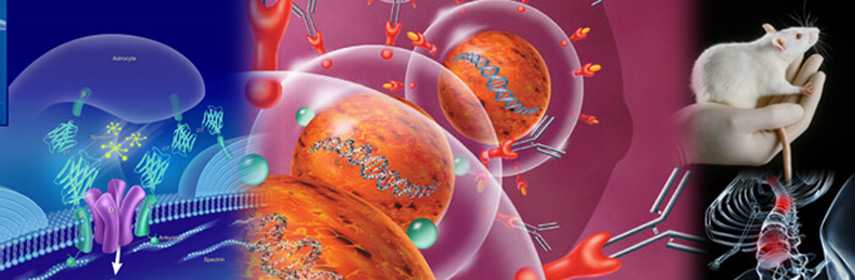
Causes, principles and practices responsible for losses/wastage of agricultural products in the food systems are explained especially in the developing world context. The consequences of these losses to the agricultural value chains in terms of qualitative, quantitative, nutritional and socioeconomic losses are also discussed. Students are then introduced to various conventional and modern loss assessment and estimation techniques and their limitations. Through case studies and inclusive discussions mitigation technologies and innovations appropriate for zero losses in the developing world for different categories of agricultural commodities and corresponding food systems are studied with special emphasis on comparing advanced and developing country contexts. Consideration is made to discuss the interrelationship between the characteristics of the agricultural products and the facilities, equipment and markets in the respective agricultural product value chains as well as food systems.
Category: ADVENT 2023
- Teacher: Edemaga Deogratius
- Teacher: Emmanuel Okello
Category: ADVENT 2025
- Teacher: Edemaga Deogratius
- Teacher: Emmanuel Okello
Category: EASTER 2025
Exploration in Sculpture Materials
Course Leader:
Brief Course Description.
This course allows student to design and produce items of their own choice, but with the guide of the lecturer, up to the last stage of production. The pieces shall be exhibited at the end of the course. This course is also designed to ensure students produce a stimulating and rewarding sculpture project (s) which allow them to develop knowledge, skills, understanding and confidence in expressing your ideas and feelings through sculpture through exploration of various materials
You are welcome to this course unite which is going to help you understand more about sculpture and materials. Sculpting dates back to ancient civilizations. In ancient Egypt, the Great Sphinx was carved from limestone. Sculpting was also important to the ancient Greek and Roman civilizations. Since ancient times, sculpting has persisted as one of the most popular art forms around the world to represent beauty, emotion, and form.
Sculptors, art critics, art appreciators, and art students use the common words for sculpting materials, styles, and techniques in order to have a meaningful dialogue with one another. In this course , we will learn several terms for the materials, styles, and techniques commonly used in the sculpting world.
Course Learning Objectives.
The objectives of this course unit include: Students should be able to:
· Design and produce different sculpture pieces for outdoor and indoor
· Learn using different materials for different sculptures and exploration possibilities of materials
Course Learning Outcomes.
Upon successful completion of this course learners will be able:
· To design and produce
· To use different production techniques
· To use different media for production
EVALUATION AND ASSESSMENT
All module is continuous assessments (group work, tests, attendance and participation) will form summative mark and will be taken into consideration in determining the final mark. The following will constitute the weightings:
o Individual projects weekly = @10%,
o Individual Take home Essay (manage your time and meet deadline) = 10%,
o sketches and Marquette 30%,
o Attendance and participation 10%,
o Total 100%
COMMUNICATION CHANNELS
· Online Lectures
· Moodle LMS (Course notes, discussion forum, notices, etc. online utilisation of mobile Moodle platform)
· Online Consultation times with lecturers
· Moodle LMS discussion forum
· Emails
· Zoom
· BBB
whats up forums
Category: TRINITY, ADVENT 2020
The research methods course introduces students to the principles of social science research and the relationship between theory and methods. Particular attention will be placed on the differences between quantitative and qualitative research methodologies as well as the different techniques used in the respective approaches to avoid bias.
1. Objectives:
1. To introduce basic scientific methods for data collection and their management.
2. To critically examine the scientific method that is normally followed in the research process.
3. To study the basic techniques for information analysis and presentation in the real world.
4. Understand the linkages between theory and the practical scientific research process.
5. To appreciate the practical application of research methods in the field in order to make the research experience real.
- Lecturer: Jeremy WAISWA
This is an introductory course to research methods. Students who complete research methods 1 will also be expected to take research methods 2 in their second year of study. The objectives of research methods 1 include:
§To
introduce basic concepts in research methodology to the students
§To
introduce different research methods to the students and discuss their
applicability to public health research
§To
discuss the importance of public health ethics in research and why it is
important
§To
help students appreciate the process of proposal writing and how it relates to
public health research
§To
help students appreciate the role of public health research in public health
practice
- Lecturer: Joseph Matovu
Category: MODULE 2
Starting from the initiation of human civilization, all efforts have remained directed towards improving the quality of life. In the process, of “Research,” the search for knowledge, is ever-increasing. A huge amount of resources in different forms is being channelled for this purpose. As such, the importance of research methodology is being felt day by day to have more and more successful research programs. The voyage of discovery could be more meaningful if due attention is given to the art of scientific investigation, particularly in designing and meticulous implementation of research projects. program. Taking all these into consideration, a guideline about the appropriate methodology to be adopted and, in the process, the methods and techniques to be used so as to have successful research projects.
Category: TRINITY 2023
Effective monitoring and evaluation rely significantly on the quality of information used. The proper use of statistics along with words makes communicating information much easier, faster and accurate than when words are used alone. This requires that monitoring and evaluation scholars and practitioners acquaint themselves with methods of collecting, analysing, and using data. This course is designed to enhance students’ understanding of the design, conduct, data interpretation and reporting of social science research. It explores the fundamentals of scientific method and scientific inquiry. It covers topics such as methodology, ethical considerations in research, strengths and weaknesses of diverse data collection methods, basic methods in quantitative and qualitative data collection; data analysis and interpretation; critical reading of statistics; and reporting of research findings for use in monitoring and evaluation. This will be attained through the use of discussions, analysis of peer reviewed journal articles, and hands-on practice. Students will learn how to conduct a research project from beginning to end.
Category: EASTER 2023

This course focuses on administration of operating systems in a client-server technology (Windows and Linux on virtual machine), installation and maintenance. It prepares students to installation of Windows Server, NTFS file system and folder permissions, Domain Name System, Active Directory, local and domain Group Policy, Windows Terminal.
Services, Internet Security and Acceleration Server, Internet Information Services, communications and networking. An introduction to Linux, installing Ubuntu, advanced usage and managing Ubuntu, terminal, working with Windows, system administration, configuration of server: WWW, DHCP, DNS, Samba, NFS, emails and printers.
Category: EASTER 2023
One of the major challenges confronting public policy in modern times is how to overcome overt and subtle discrimination in the art of governance, economic growth and development. Among the several pathways to the realization of this goal, the pursuit of tolerance of social diversity and the eradication of exploitation of one group by others remains a major focus. Understanding the political and civil rights of different social classes, as well as their economic, social and cultural rights provide the basis for the course on Social Diversity, Gender, Equity and Public Policy.
Students will be guided to understand the discourse on social differences, and how state and society have responded over time to the growing demands for inclusive growth and social justice in development. It is important for students to appreciate how evidence from reflective research is contributing to the unfolding paradigm shift towards embracing social diversity and equity with special reference to race, gender, ethnicity and disability, to name a few.
The course highlights how policy instruments influence the process of income distribution across different social groups; how public policy can be used to address people’s freedoms across different social groups. In addition, it points out the kinds of social research that have evolved around the theme of public policy, and the pressure on social scientists to re-examine the norms of research practice. The trend is in favour of research methodologies that provide more disaggregated information and explanation on the situation of different social groups in society, with special reference to their relations with each other and implications for social justice. The ways in which life-course changes such as childhood, youth, motherhood, working life, ageing, disability among others are managed through various public policies will also be addressed.
- Teacher: Kukunda Elizabeth Bacwayo
- Teacher: R cheptoris
Category: Year 2

Everyday governments make important decisions that affect the lives of their citizens. People, private institutions and organizations also engage in similar decision-making policies. These decisions are shaped and influenced by many factors and ideas that we generally consider to constitute public policy. This course gives an overview of the major social science approaches, theories, methods and practices that help us to understand public policy. Social science is an umbrella term that refers to the plurality of disciplines that facilitate the study of society. They include anthropology, sociology, economics, psychology, political science, and, in some contexts, history, geography and law. These disciplines cannot be satisfactorily covered in one semester. To strike an acceptable balance between breadth and depth, this course will cover eight key disciplines that inform governmental decisions and public resource allocations: anthropology, sociology, psychology, political science, economics, law, geography and demography. The aim is to outline, for non-social scientists, the key disciplinary approaches that will enable both policy scientists and policy practitioners to contextualize the work they do.
- Teacher: Maureen KUSIIMA
Category: ADVENT 2025
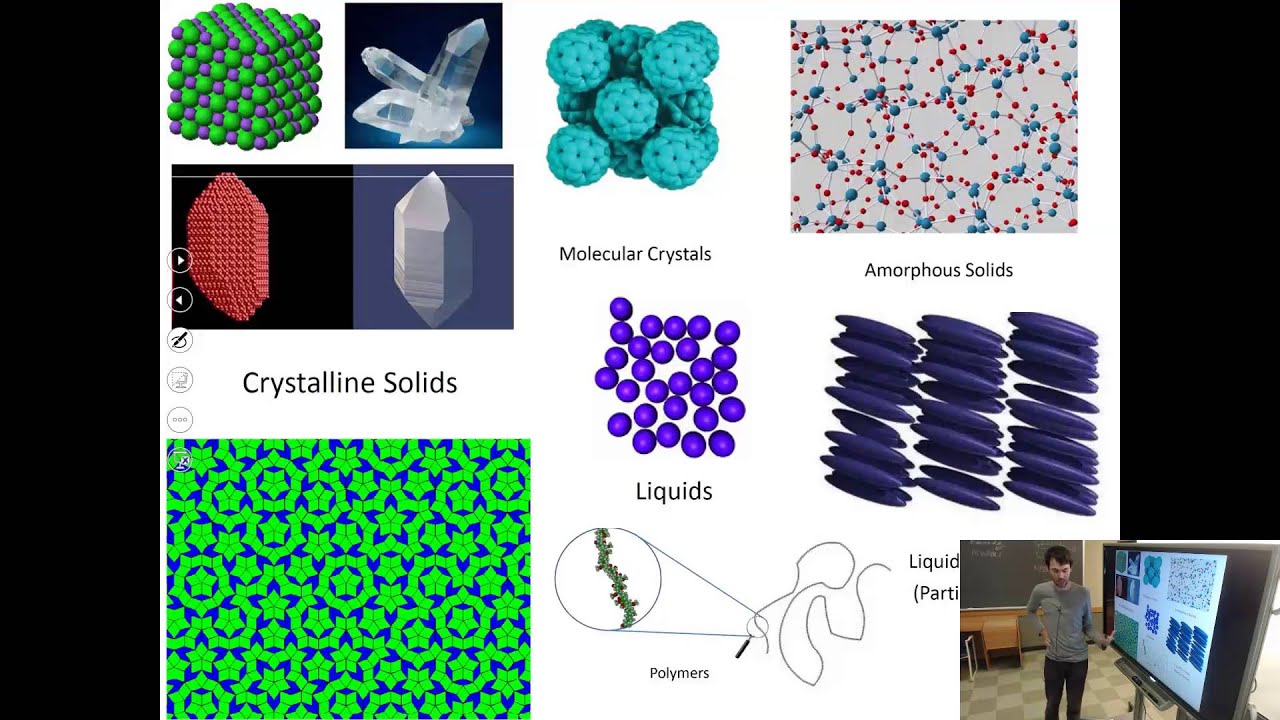
Solid State physics emerged as a discipline in the 1940s with developments such as the such as the
semiconductor transistor, and now forms a sub-discipline of the biggest field
in physics, condensed matter.
Solid state physics is a
very diverse field which spans quantum physics, electromagnetism, and
statistical and thermal physics. There is also overlap and application to many
fields, including chemistry, medicine, biology, computing, materials science,
and electrical engineering.
Because 3D solids
are composed of ~ \( 10^{23} \) atoms, and real solids incorporate many local defects,
much of solid state physics consists of learning to construct appropriate
models and approximations.
Category: EASTER 2023
Instructions:
- All the questions are compulsory
- Close all other open applications on your device and all other tabs on Your Browser (Safari, Chrome or Firefox) and remain with one active Tab.
- Once you have started the Exam, please do not move away from the window.
(If you are still working in your interview after 45 Minutes has concluded, you will automatically be logged out and your completed work will be submitted.)
NOTE:
Please note, the interview is strictly monitored and recorded. Any applicant who does contrary will lead to automatic disqualification.
Best Wishes
- Teacher: Rebecca KANGABE
- Teacher: Technical Manager
- Teacher: Amos T. NUWASIIMA
Category: University ICT Services (UIS)
Welcome to this course of African History since 1800, that is the foundation for all the different History courses taught at university. It is a course that analyses all major events in Africa since the Late Stone or the complete evolution process. Focus is mainly on all the historical events on the African continent that have shaped Africa today in the post-independence. The major historical events are arranged in a historical order, also known as chronological (from the earliest events to the most recent ones).
Category: ADVENT 2021
Category: ADVENT, EASTER 2021
Category: ADVENT 2021
Category: ADVENT 2022
Category: TRINITY 2022
Category: EASTER, EASTER, TRINITY 2021
Category: EASTER, EASTER, TRINITY 2021
Category: EASTER, EASTER, TRINITY 2021
Category: EASTER, EASTER, TRINITY 2021
Category: TRINITY 2022
Welcome to the class of Understanding Ethics from Christian Perspectives, an exciting part of your Diploma in Information Technology journey! In this course, we will explore the intersection of faith and technology, examining how Christian values and teachings can guide ethical decision-making in the IT world. As future tech professionals, it’s important to consider not only the technical aspects of your work but also the moral and spiritual dimensions. Through thoughtful reflection, discussions, and real-world applications, this course will help you navigate the ethical challenges you may encounter in your careers, all while drawing inspiration from Christian principles of justice, integrity, and compassion. I look forward to the conversations and insights we’ll share as we seek to build technology that honors both God and humanity.
Category: Foundation Studies
This course unit will provide you with theoretical and practical knowledge about water quality, water vulnerability, water pollution control, and water treatment
The course will enable you to make informed decisions about the treatment and disposal of effluents, and the protection of water sources, and you will be able to evaluate the operation and control of water treatment plants.
Course Objectives
To ensure that students are able:
- Objective 1: Describe the concept of the water cycle (hydrologic cycle) and how water moves from one compartment to another
- Objective 2: Assess the vulnerabilities of water sources and the sources of pollution in the water cycle
- Objective 3: Analyze water quality parameters in the laboratory and field and explain what the results of water quality analyses mean
- Objective 4: Apply hands-on-skills and experience in water quality monitoring
- Objective 4: Apply hands-on-skills and experience in water quality monitoring
- Objective 5: Develop and use water safety plans
- Teacher: Rodgers TAYEBWA
Category: ADVENT 2023